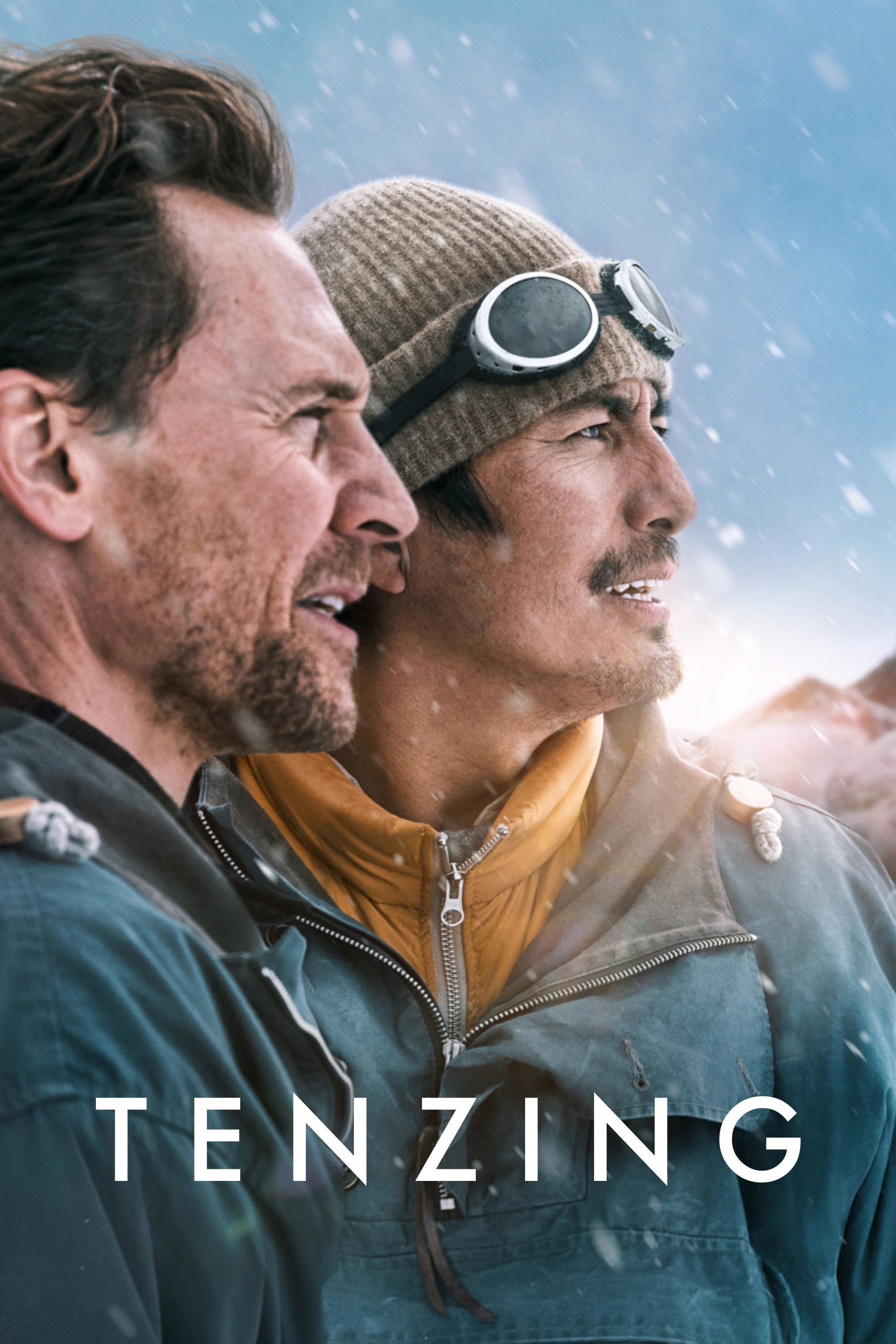
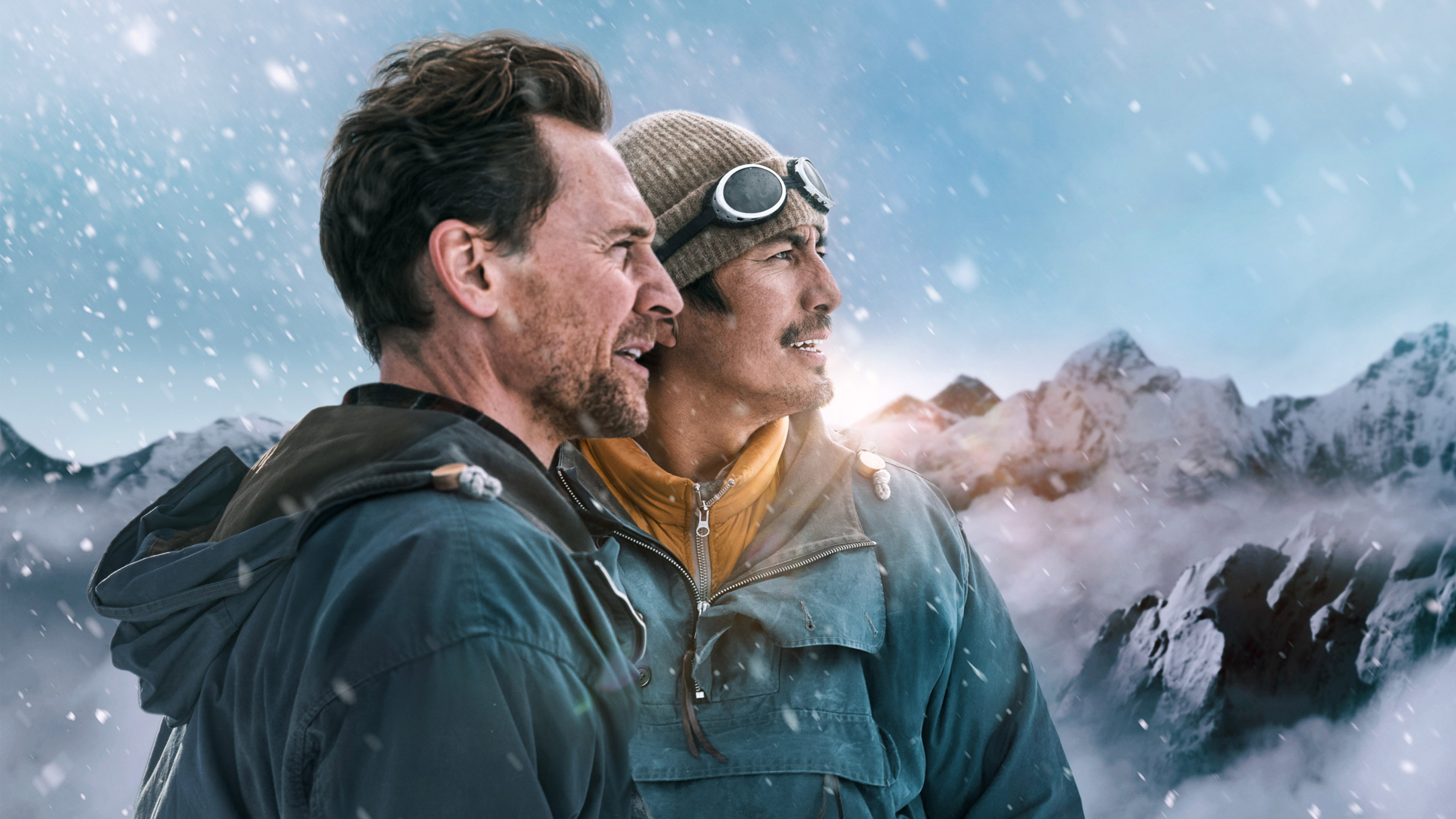
Jennifer Peedom's **TENZING** restores the historical narrative surrounding the infamous first successful ascent of Mt. Everest in 1953 to include its most unsung hero — Tenzing Norgay.
It's been 73 years since Tenzing Norgay and Sir Edmund Hillary made history by becoming the first climbers confirmed to have reached the summit of the world's tallest mountain.
Yet, for much of that time, the historical narrative surrounding their extraordinary achievement has largely favored Hillary, relegating Tenzing's equally remarkable accomplishment to something of a footnote. (We might attribute some of this historical imbalance to the lingering influence of British colonialism, or perhaps a prevailing sense of Western cultural superiority — something the film itself never fully addresses.)
Peedom's film seeks to rectify that historical imbalance, placing Tenzing (played by Tibetan actor Genden Phuntsok) at the center of a sweeping, visually magnificent account of perseverance, friendship, and the extraordinary human determination required to accomplish the seemingly impossible.
Phuntsok, with no prior climbing experience before being cast, prepared to take on the role by moving into the village of Khumjung in Nepal to train with renowned Sherpa Phurba Tashi, who has reportedly ascended Mt. Everest 21 times. Immersing himself in the Sherpa language (distinct from traditional Tibetan), Phuntsok undertook an extraordinary physical and cultural transformation to convincingly portray one of history's most accomplished mountaineers.
Phuntsok's preparation is nothing short of miraculous — hiking for four hours every day, oftentimes with a backpack weighted down by heavy rocks, and sometimes barefoot. Several scenes in the film depict Sherpas carrying supplies up the snowless hills barefoot, including one particularly memorable scene in which a young Tenzing marvels at the mountain boots worn by British mountaineer George Mallory (Johnny Flynn).
As someone who has had experience hiking at high altitude, it is also worth noting how remarkable it is that Phuntsok's training in the village of Khumjung — situated at an elevation of approximately 12,400 feet — amplified the physical challenges of each of his daily hikes in preparation for the role. Simply acclimatizing to such an elevation presents considerable physical challenges, let alone undertaking hours of strenuous hiking while carrying heavy loads.
What ultimately unfolds onscreen is a remarkably believable account of the physical and mental demands required of Tenzing to achieve his goal of ascending the famed Mt. Everest (or Chomolungma in Tibetan, meaning "Goddess Mother of the World") — and it is Phuntsok's thoroughly committed performance that carries the film, which is especially remarkable given that his co-stars include Tom Hiddleston as Edmund Hillary and Willem Defoe as John Hunt.
The scenery is magnificent. The performances from Phuntsok, Hiddleston, and Defoe are equally impressive, but it is Phuntsok who provides the film with its emotional center, bringing an understated dignity and quiet determination to a man whose extraordinary achievements have too often been overshadowed by those of his fellow climbers.
Peedom's earlier film — the documentary **SHERPA** (2015) — put her in touch with the children and grandchildren of Tenzing, and it was through her interactions with them that she became convinced this story needed to be told as a dramatized narrative that shed light on his early life and the events that ultimately led him to join the famed 1953 expedition.
Peedom's decision to film on actual glaciers (with New Zealand standing in for Nepal) — including a harrowing scene featuring Hiddleston actually climbing out of an icy crevasse — lends an extraordinary authenticity to the film. With none of the production reportedly filmed on a soundstage, the distinction between a National Geographic documentary and a sweeping cinematic dramatization becomes increasingly blurred.
The formidable landscapes are not merely picturesque backdrops; they are an essential part of the story, conveying the immense physical challenges, breathtaking beauty, and ever-present dangers confronting those who dared to venture into such an unforgiving environment.
Quietly released on Apple TV, **TENZING** has arrived with surprisingly little fanfare, emerging as one of 2026's great new films — a visually breathtaking and deeply affecting historical drama that deserves a far wider audience.
**TENZING** is a triumphant film that, after 73 years, places the spotlight firmly on the extraordinary achievements of Tenzing Norgay, his humble beginnings in Nepal, and the oft-maligned contributions of the Sherpas whose courage, expertise, and sacrifices made these expeditions possible.
As a biopic, **TENZING** is one of those rare films that reminds viewers to never stop believing in their dreams, that kindness is the universal language of friendship, and that perseverance is ultimately the best path forward toward fulfilling those dreams.